Compliance Management
SecHub connects the three records a compliance program depends on: which assets fall under which framework, who owns each control, and which mitigation tasks are still open. Compliance leaders can set scope, assign responsibility, and follow remediation to completion across SOC 2, HIPAA and others, all from one platform.
The Core Challenge: Compliance Work Without Scope or Owners
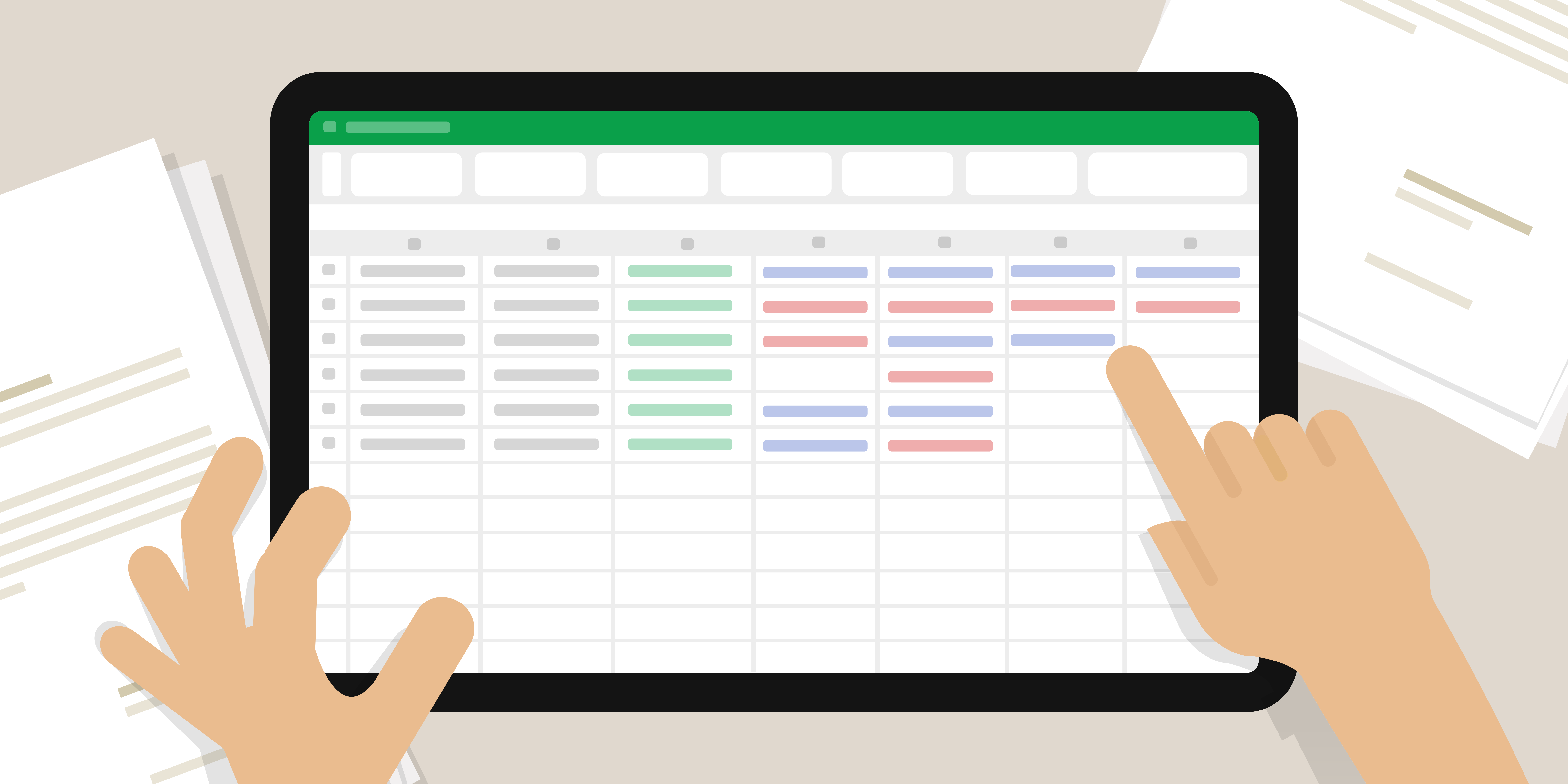
A compliance program usually breaks down at the handoffs between its parts. A framework lists dozens of controls, yet nothing in the program says which servers, applications, and databases each one applies to. A gap is found during a review, but the finding sits in a report until someone raises it. A fix is agreed in a meeting and then followed in a chat thread, a ticket queue, and a spreadsheet at the same time.
Every new requirement adds controls, owners, and open actions that someone has to keep track of.
When scope, ownership, and remediation are tracked in separate places, four problems follow:
- Undefined scope: Teams cannot say with confidence which systems a framework covers, so controls are applied unevenly or skipped.
- Unowned controls: A failing control with no named owner has no one to notify and no one to fix it.
- Stalled remediation: Open fixes are spread across tickets, chats, and spreadsheets, so no one sees the full backlog.
- Reconstruction at audit time: Teams piece together who was responsible and what was done from old emails and meeting notes.
Each of these problems traces back to the same cause: compliance work that is not tied to a defined asset, a named owner, and a tracked task.
Feature Breakdown
Asset-to-Framework Scoping
Define which assets fall under each framework, so every control applies to a named set of systems instead of to the organization in general.
Assign each asset to one or more frameworks, such as SOC 2 for a customer-facing application or HIPAA for a system that stores patient data.
List every asset in scope for a framework in one view.
See all the frameworks and controls that apply to a single asset in one record.
Update the mapping when an asset is added, retired, or changes purpose.
Give auditors a documented boundary for each assessment.
Let control owners see exactly which assets their controls cover.
Control Ownership
Assign each control to a named owner, so every requirement has a person who answers for it when something needs to change.
Assign an owner to each control across SOC 2, HIPAA and others.
Find controls that still have no owner.
View everything one owner is responsible for: controls, assets, and open tasks.
Reassign controls when roles change or people leave, so responsibility stays current.
Give security, IT, risk, and compliance teams one shared record of who is responsible for what.
Answer an auditor's question about who owns a control by pointing to the platform instead of to an email thread.
Mitigation Task Tracking
Follow each remediation action from the moment a gap is identified until it is closed.
Create a mitigation task for each identified risk or control gap.
Assign each task to an owner and link it to the control it affects.
Track every task from assignment to completion.
See the open backlog across the whole program, not team by team.
Keep a history of what was found, who handled it, when it was closed, and which evidence supports the result.
Report remediation progress to leadership from the same records the working teams use.
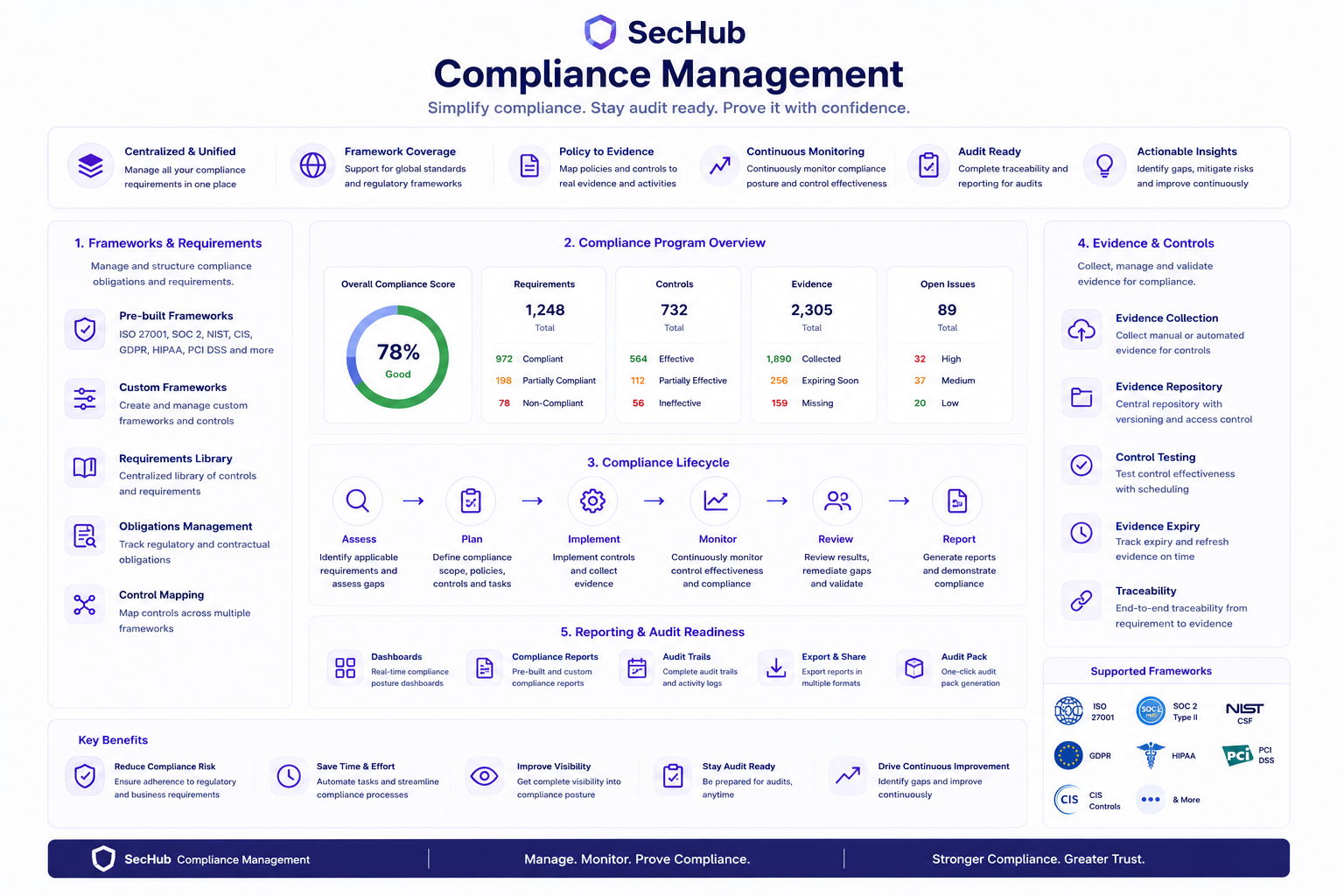
The SecHub Compliance Workflow
SecHub organizes compliance work in three steps, and each step produces the record the next one depends on.
Step 1: Set the Scope
Assign your assets to the frameworks that apply to them. The result is a defined boundary for each framework: the systems whose controls will be assessed, and the controls that apply to each system.
Step 2: Assign Responsibility
Give every control a named owner. When a risk or control gap is identified, create a mitigation task, assign it to an owner, and link it to the control it affects. From this point, every open issue has a person responsible for it.
Step 3: Track to Closure
Follow each task until the gap is resolved, with the supporting evidence linked to the control it supports. Leaders see which tasks remain open, and the record shows who was responsible, what was done, and when.
How SecHub Supports SOC 2 and HIPAA
These frameworks use different language, but each expects a defined scope, named responsibility, and documented corrective action. SecHub maintains those three records for all of them in one place.
SOC 2
A SOC 2 report describes the systems in scope and assesses whether the controls over them are designed and operating effectively. SecHub holds the in-scope asset list and the owner of each control, and it records the tasks raised when a control falls short, so deficiencies reach the people responsible for correcting them.
HIPAA
The HIPAA Security Rule covers systems that create, receive, maintain, or transmit electronic protected health information. It requires an identified person responsible for security and documented risk management. SecHub maps those systems to HIPAA, records who is responsible for each control, and tracks every action taken to reduce an identified risk.
What a Managed Compliance Program Delivers
Faster answers about scope
When an auditor or executive asks which systems a framework covers, the answer comes from the asset-to-framework map instead of a search through documents.
A shorter path from finding to fix
A failing control has a named owner, so the person who can act is known the moment the gap is found.
Less reconstruction at audit time
Ownership and remediation history are recorded as the work happens, so teams spend less time piecing it together afterward.
Continuity through staff changes
Responsibility lives in the platform, not in one person's memory, so when someone changes roles their controls can be reassigned instead of going unowned.
Powerful cybersecurity systems, built for trust
Run secure, reliable, and scalable solutions every day. Here’s why organizations and teams rely on our platform for their cybersecurity needs.
SOC2
ISO27001
HIPAA

GDPR
Certified Security Standards
Workflows are protected by industry-leading security and compliance practices.
Data Privacy and Control
Your information remains private and fully under your control at all times.
Flexible Access Management
Control permissions for teams, applications, and actions with ease.
Cyber Security Tools